One Month in Oaxaca, Mexico
- J

- Jul 4, 2021
- 5 min read
Updated: Jul 6, 2021


My time in Oaxaca is not what I thought it would be.
I booked a flight to Oaxaca from Mexico City on a whim, as you do when you are a) traveling alone b) with no return flight and c) no reason to be back in your home country in the near future.
When fellow travelers tell me that a place was their favorite, I listen. I might even go there. This was the case for Oaxaca, one of Mexico's most well-known and provincial states, with an eponymous city capital where I'm now living for a month. Oaxaca is a town saturated in rich color, mole, textiles, leather goods, mezcal, and gente amable. It is one of Mexico's most popular destinations for nationals. As a foreigner, I've found it a little challenging to find my footing here. And that's OK. After all: 18 months, a global pandemic, two job changes, and a heartbreak have passed since my last international trip.
Soledad. This word has been on my mind this past week. It popped in my head while I was tracing the dimly lit stone streets of Oaxaca Centro home after a quiet dinner alone one night. I often live the nomadic adage that 'when you travel solo, you are never alone.' But in that moment, I felt lonely (one of the English interpretations of soledad). Exploring your non-native language sometimes unlocks a different perspective, one of the many reasons I love traveling Latin America. I love the Spanish language. It has no shortage of ways to communicate some expression of "alone-ness," and I am used to sharing some variation of the following:
Estoy viajando solo—si solamente, solita, sola—y soy soltera tambien.
Interpretation: I'm traveling alone—yes, alone, alone, alone—and I am single, too. In the past year-and-a-half, I've had versions of the conversation all over the Americas in both English and Spanish. I am pulled into these conversations, which usually stem from general small talk or people's curiosity (and sometimes their bewilderment or concern). There is a happy, liberating tenor to traveling internationally alone. Sharing your story, at its best—and this is true for anyone, in any walk of life—is fun, engaging, intimate. But there is always a less-sexy version of the story: Single, without a home of my own, and equipped with all the fixings to work remotely, I decided to go to Mexico. One of the only places allowing Americans right now. Go me.
I got fully vaccinated and decided to take a flight to Mexico that I had booked more than six months prior (as a placeholder, I told myself). When the trip came around, there wasn't a good enough reason not to take the trip. I was stir-crazy, and love to travel. Since landing in MX, I have needed to remind myself more than once that: I am not alone in feeling alone or even a bit lost in the post-pandemic age; that I and this world are, frankly, distinct from 2019, in part because of the pandemia and other countless global events, and thus will interact differently; and that I am asking a lot of myself to have it all immediately figured out after such tumult. Plus, from a super-practical standpoint, living out of short-term rentals is logistically challenging.


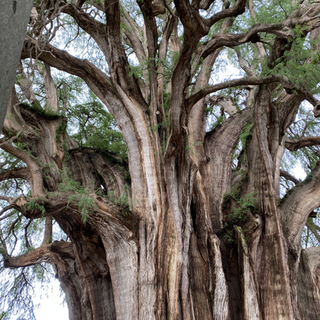


This morning, Saturday, July 3, I was picked up by a bilingual tour guide named Soledad for a full-day of visiting towns and sites outside the city. A Oaxacan native, Soledad was named after Nuestra Señora de Soledad (Our Lady of Solitude), another moniker for Mother Mary. As a van carrying Soledad, seven other travelers, and myself trekked across the state of Oaxaca, we listened to traditional Oaxacan music. It's beautiful. One song stuck with me: "Llorona" by Ángela Aguilar. (Listen to it now.) Llorona is a famous Mexican folk song with countless covers—everyone in the car but me knew it by heart, and Aguilar's rendition is enchanting, tender, bittersweet. The name Llorona is a cousin to the Spanish verb llorar, meaning to cry, and the song lyrics include a description of flowers that look like they're weeping. When I was first learning Spanish, I used to confuse llorar with lluvar, to rain, because of their similarities in sound and meaning.
Almost every day in Oaxaca, it rains. It's fitting that I am in Oaxaca during the rainy season, which reminds me of Junes in Denver, my once-hometown with a similar elevation and an unpredictable yet palatable climate. As I write this on a Saturday night, the sky is doing a striking show of rain, lightning, and thunder over the valley of Oaxaca City. It is something to behold, and pairs perfectly with the sweet acoustics of Llorena, a flickering Nuestra Senora de Guadalupe candle, and an evening of writing. After a long, adventure-filled day of exploring ruins, tasting larva-ladened mezcal, witnessing the miracle of hand-spun woolen textiles, and sharing loud laughs with a warm, diverse group of travelers, it's nice to have a quiet evening alone. Maybe a little soledad isn't such a bad thing after all.
What to Do in Oaxaca
Don't skip a double-decker bus tour. This was my first time in a double-decker bus, so perhaps I was swept up by viewing such a picturesque-city from up high.

Oaxaca's macabre historias bus tour was perfectly kitsch and hack, with several costume changes and acting bits by our dedicated guide. He made as ooo, ahh, recoil, and cackle. (Note the photo to the right of the guide dressing up as the ghost of a dead woman and trying to scare passengers.) Plus, the views of city Centro alone were worth every cent, which was 100 pesos (~$5 USD). I would happily throw down another fiver to spend an hour this way.
Take a tour of Monte Albán. For me and others I spoke with, this eight-kilometer pre-Columbian archaeological site is more impressive than the Teotihuacan pyramids outside of CDMX (if you can even compare that kind of thing). In short: Don't skip locals' urging to get a guided tour of Monte Albán (and check out the pics below). Other must-see sites with day-long tours from Oaxaca are Mitla, Teotitlán del Valle, and Hierve de Agua (sadly, the petrified waterfalls are closed right now due to a municipal dispute).


Oaxacan shopping is spectacular. I have made a near-daily activity of strolling the vendors at Mercado Benito Juárez, Mercado 20 de Noviembre, and Zócalo Oaxaca. Bring cash. From Oaxaca's famous colorful hats, breezy clothing, and handmade purses to bottles of locally made mezcal and piping-hot empanadas, these markets are an incredible way to explore the city and support local makers.
You really don't need my restaurant recommendations.

Oaxaca is famous for its mole, street food, and chapulines (crickets), and I strongly suggest to try all three—maybe even at once! In my opinion, CDMX still trumps comida Oaxaqueña, but La Olla, Expendio Tradición, and Restaurante Zandunga are three spots I found by happy accident and would recommend to anyone. The internet is chock-full of where-to-eat-in-Oaxaca lists, but I found that walking into anywhere that gives you a gravitational pull is a better method for discovering great food (and drinks). Besides, Oaxaca is a city best explored on foot.


Comments